GVEG Newsletter – Spring 2026 Edition
The GVEG Newsletter for Spring 2026 is here!
The newsletter can be dowloaded below:

Protecting the Environment for Generations to Come
The GVEG Newsletter for Spring 2026 is here!
The newsletter can be dowloaded below:
The GVEG Newsletter for Autumn 2026 is here!
The newsletter can be dowloaded below:
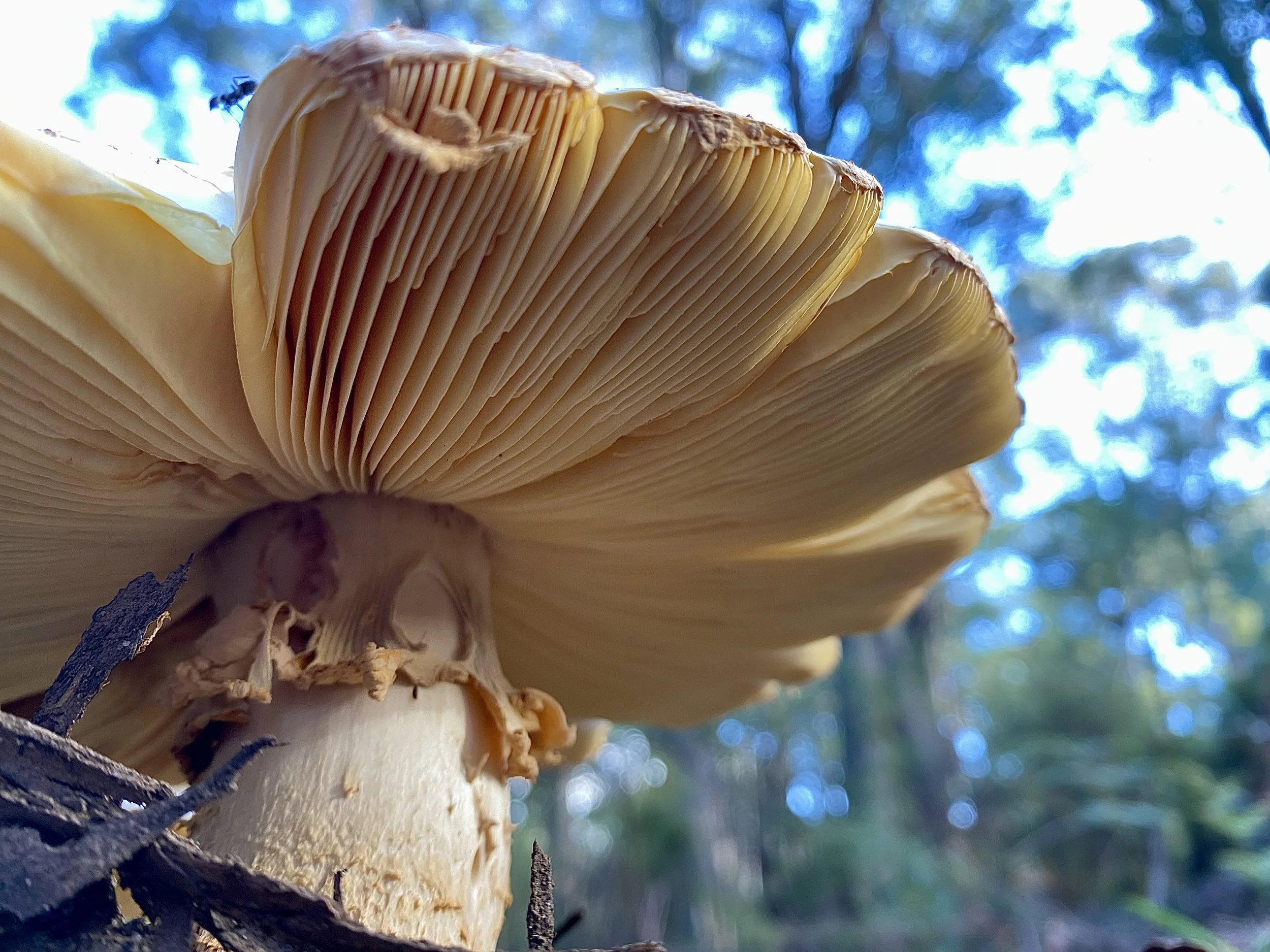
Autumn fungi in Strathbogie State Forest. Photo by Mel Stagg, 5th April 2026.
There is currently a lot of media attention on the Murray Darling Basin Plan review discussion paper, due for comment by May 1st. This is an important opportunity for our members and supporters to have your say about the importance of the Plan and the importance of ensuring that there is sufficient water allocated for the environment. This can be a complicated exercise or can be a simple as describing what value you place on our rivers and streams across the Basin.
GVEG will be submitting an extensive submission that will be available on our website ASAP, but your committee ask you to consider a private contribution to compliment the work of GVEG and similar organisations.
Comments are required to be emailed to BPRsubmissions@mdba.gov.au by Friday the 1st of May 2026
Below are sites that GVEG have an association with that provide guidance to individuals on submitting comment.
https://environmentvictoria.org.au/action/2026-basin-plan-review-submission/
https://mdca.org.au/high-ambition-statement/
https://envirojustice.org.au/submission-guide-murray-darling-basin-plan-review/
https://mdca.org.au/
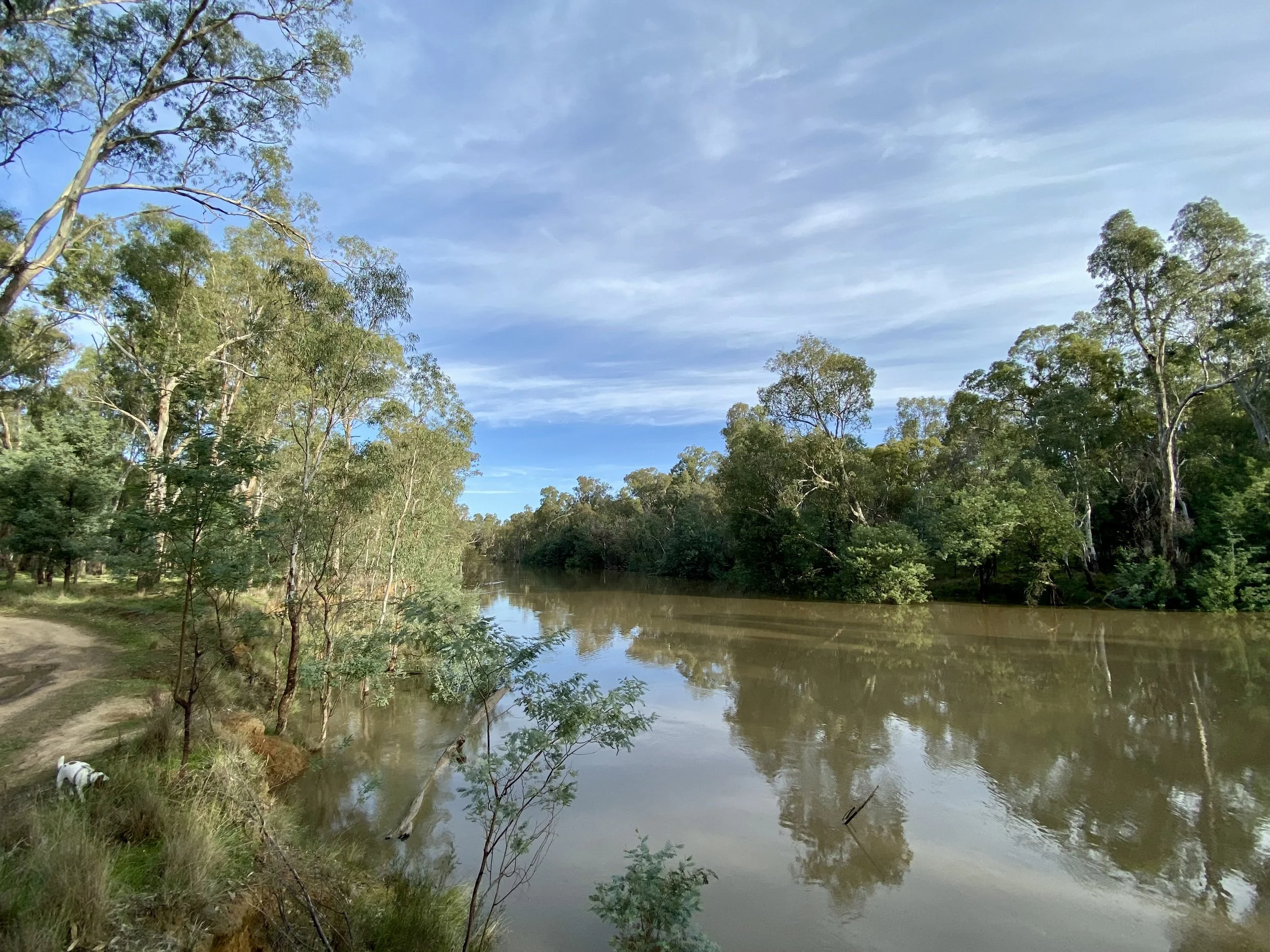
Goulburn River, Shepparton. Photo by Mel Stagg, 3rd May 2020
You can also read our environmental water policy for guidance.
Our high-level points which will be included in our submission are as follows:
The MDB Plan has been critical in helping maintain or restore the environmental health of the MDB’s rivers, wetlands and floodplains
The over-arching vision of the Plan for a healthy working MDB (including healthy ecosystems, productive water-dependent industries, basin water management that includes matters relevant to First Nations peoples, and communities with sufficient water supplies to sustain them) has provided a sensible and effective framework for delivering the Plan since 2012. We believe that it remains current for the next iteration.
The 2007 Water Act required that the Basin Plan be developed and implemented in a manner that optimises social and economic outcomes during the process. GVEG believes this overall requirement has been met, as supported by the 2025 Basin Plan Evaluation which found that water reforms had had a relatively minor effect on the Basin's overall economy.
Regardless of the outcomes of the review, it is critical that the existing Plan’s environmental water recovery targets are delivered within this Plan’s timeframes.
The impacts of climate chang e on reduced inflows and higher variability are a critical part of future planning and adaptation.
We support the Discussion Paper’s recognitions tnat First Nations peoples and their visions for a healthy Basin need to be more actively included in the MDB review.
GVEG is a strong advocate of targeted, voluntary water buybacks as an effective means of achieving the Plan’s environmental water targets and consider that some of the other water-efficiency projects delivered as alternative ways of recovering water have not been cost-effective.
Easing of constraints on out-of-channel or overbank flows is critical to improving the ecological health of the MDB’s wetlands and floodplains, as documented for the Goulburn system.
The Review, and MDBA, need to be better articulate how water is allocated and used across the Basin.
GVEG water spokesperson, John Pettigrew, has called out cries by some local business and community advocates for additional time to prepare submissions to the MDB review. Read our media release here.
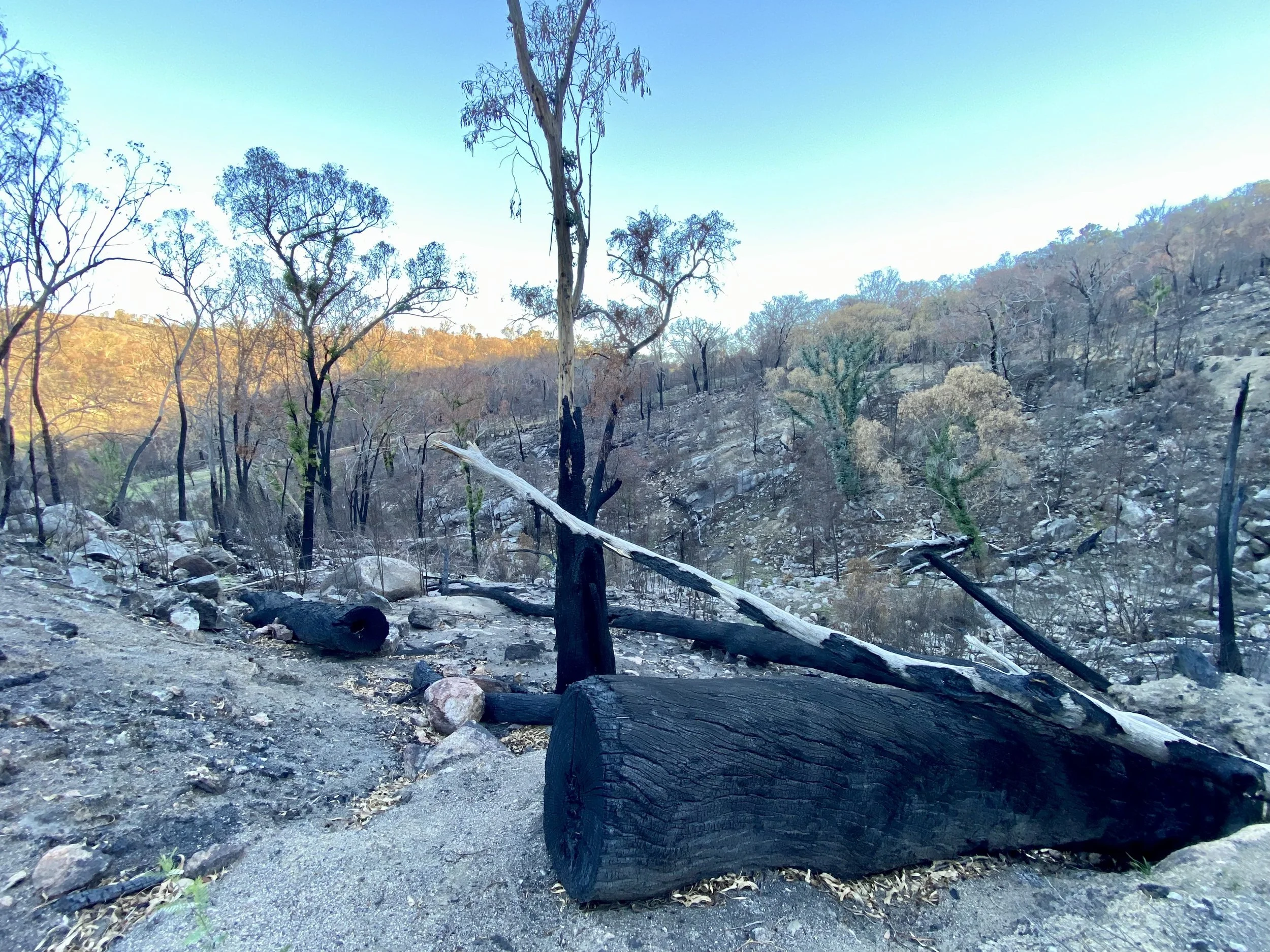
Gully burnt in the Longwood fire, Longwood East. Photo by Mel Stagg 6th March 2026.
GVEG provided a detailed submission to this important Inquiry, which you can read here.
Our main recommendations were that:
Prescribed burning practices in Victoria need to be urgently reviewed, and alternative options for reducing fire risk introduced.
The Joint Fuel Management program be reviewed to incorporate regional and statewide targets for Planned Burn Exclusion Zones to ensure that sufficient areas are being allowed to mature into less fire-prone vegetation stages to provide refuge at a scale that enables ecosystems and vulnerable species persist.
In the context of the impacts of the Longwood-Merton fire, a wildfire-mitigation landscape plan should be developed for the 24,000 ha Strathbogie Immediate Protection Area (IPA) to minimise the risk of these long-unburnt mature forests being burned.
Management strategies and funding programs for roadside weed management be reviewed to incorporate weeds that may not be listed under the CALP Act but contribute significantly to fuel loads and increased fire risk (e.g. Wild Oats, Phalaris, Perennial Veldt-grass)
Increased funding be provided to local governments and road management agencies to support ongoing, strategic weed-reduction and biomass-reduction programs along major roads
Clearer lines of responsibility are established for roadside weed and biomass management as the current system is too devolved by road authorities and LGAs to ensure that a strategic biocontrol and fuel-reduction program is being delivered regionally and statewide.
One-off permits could be issued for small-scale burns during the fire-danger period with restrictions on use (as per Schedule 13 permits for farmers but scaled to smaller properties)
CFA brigades could be supported to assist with burning clear zones around houses and other infrastructure where landholders requested that support.
’Immediately implement stronger commitments to urgent reduction in greenhouse gas emissions.’
Significant, long-term funding is provided by government to support recovery of the natural environment, which matches funding already committed to help local communities and landholders recover. The natural environment likewise needs this investment!
We suggest that these resources need to be incorporated into standard recovery practices following major wildfires.
Strategic biodiversity-response programs needs to become a structured part of the conservation work of DEECA and its partner agencies and stakeholders, helping to then provide rapid, expert response to major fires.
Protection and retention of large trees become a priority action as part of pre-burn, burn and post-fire management and recognises their significant ecological and cultural values.
There needs to be a dedicated, government-led effort to mitigate misinformation and disinformation.
The GVEG Newsletter for Summer 2025/26 is here!
The newsletter can be dowloaded below:

Rainbow Bee-eater (Merops ornatus), a beautiful Summer visitor to the Goulburn Valley. Photo, Boulevard Bush Reserve, Shepparton, by Diana Padrón Nova.
The Shepparton News Editorial Tuesday 9th December accuses the Commonwealth Government of deliberately delivering water that has damaged the Goulburn River without offering any evidence to support the assertion.
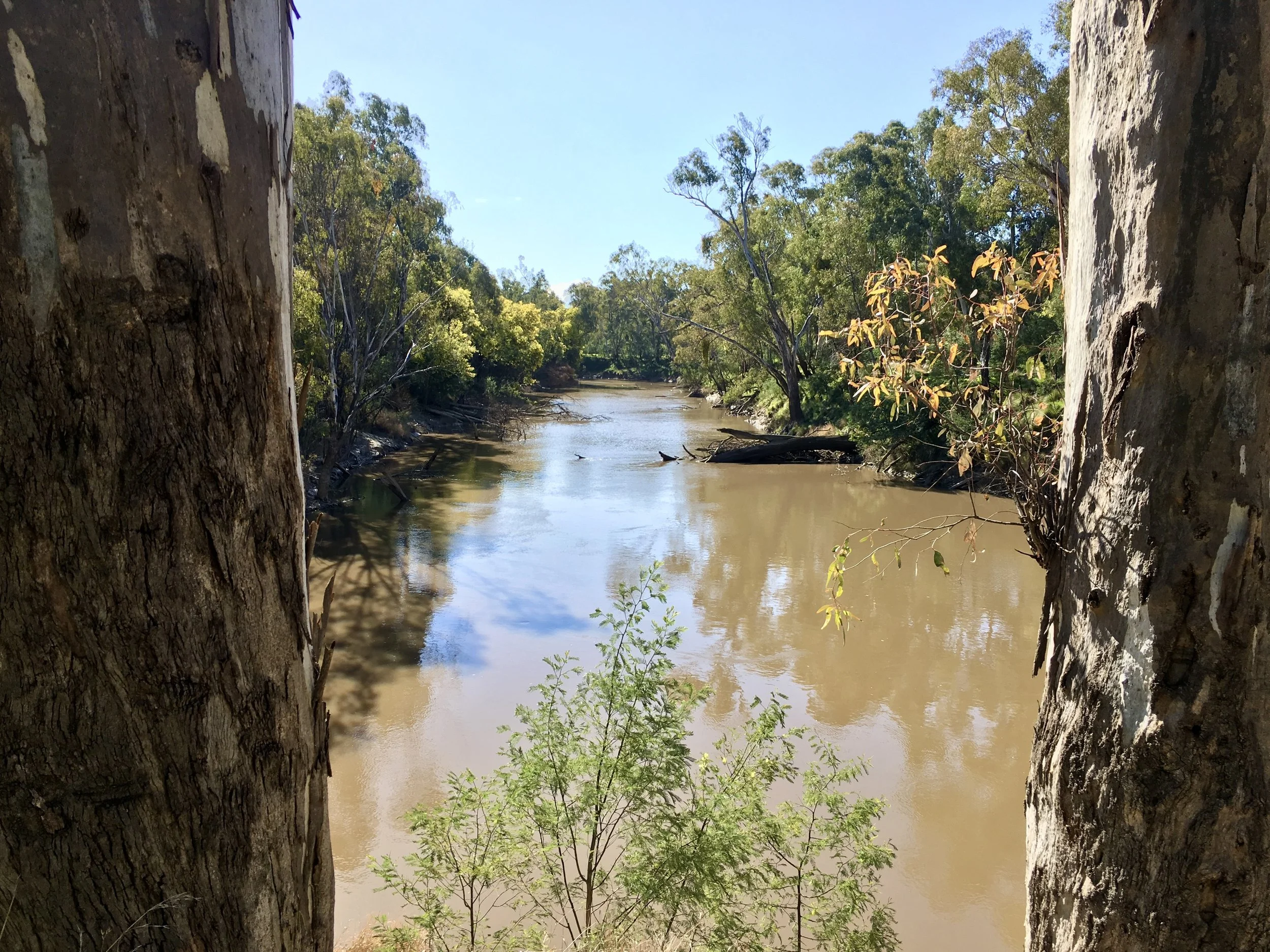
Goulburn River in Spring, Shepparton. Photo by Mel Stagg.
The delivery of this water is coordinated by a joint States and Federal Government committee that not only achieves the best outcomes currently available but has strict rules that safeguard against any damage to the environment. To achieve the full potential of water held for the environment the easing of constraints (low lying public and private lands requiring easements to allow brief inundation) to flows is an essential part of the Basin Plan. Unfortunately for our Goulburn River, support for easing constraints has not been forthcoming from the irrigation sector, local government and the Victorian government. The easing of constraints allows the delivery of E-water to connect with the hundreds of wetlands along the Goulburn and thousands downstream.
The Goulburn River has suffered considerable past damage, predominately over summer months with unnaturally high flows to satisfy downstream irrigation. Little or no damage can be attributed to past environmental flows. This is not unexpected, as no “new” water has been created for the environment, entitlement volumes in Eildon remain the same as they were prior to the Basin Plan. It is impossible to understand how returning some of the damaging high summer flows to more natural winter/spring flows could do anything but improve the overall health of our Goulburn River.
To accuse the Commonwealth Environmental Water Holder (CEWH) of acting “without fear and without research” flies in the face of significant research and monitoring taking place in the Lower Goulburn and across the Basin. CEWH’s science and monitoring program (Flow MER) shows that these flows have reduced erosion, supported riverbank deposition, and promoted riverbank plant germination and growth.
The accusation also ignores and is an insult to local consultation, namely the Goulburn Environmental Water Advisory Group (Goulburn EWAG), its members include State and Federal EWH’s, GBCMA, GMW and importantly, indigenous nations, local landholders, fishing and tourism interests. This EWAG has access to all information on E-Flows including timing, motoring and outcomes of each flow.
The Goulburn EWAG has significant input from landholders and fishing interests who constantly question the science and seek answers to fish breeding challenges. In GVEG’s opinion the Shepparton News editorial fails to constructively add to readers knowledge and understanding of a complex issue and maligns the roles and inputs of the CEWH and locally managed advisory committees.
John Pettigrew, GVEG Secretary.
Goulburn Valley Environment Group (A0021125E) is holding its AGM on:
Saturday, October 25th the private dining room at The Food Store, 53 Fryer Street, Shepparton. Meeting starts at 11 am.
The purpose of the meeting is to confirm the minutes of the previous AGM, receive the financial statements for the 2024-25 financial year, elect the committee members for 2025-26 and confirm annual subscription fees. Lunch is available at your own cost.
Our guest speaker this year will be Ben Gill, a conservation campaigner with Victorian National Parks Association. Ben will talk about the Central West campaign to create more Parks and the current threats to existing Parks.
We encourage all GVEG members to join us if you can. For catering purposes, please rsvp to our Secretary, John Pettigrew, at j.m.pettigrew@bigpond.com.
The GVEG Newsletter for Spring 2025 is here!
The newsletter can be dowloaded below:
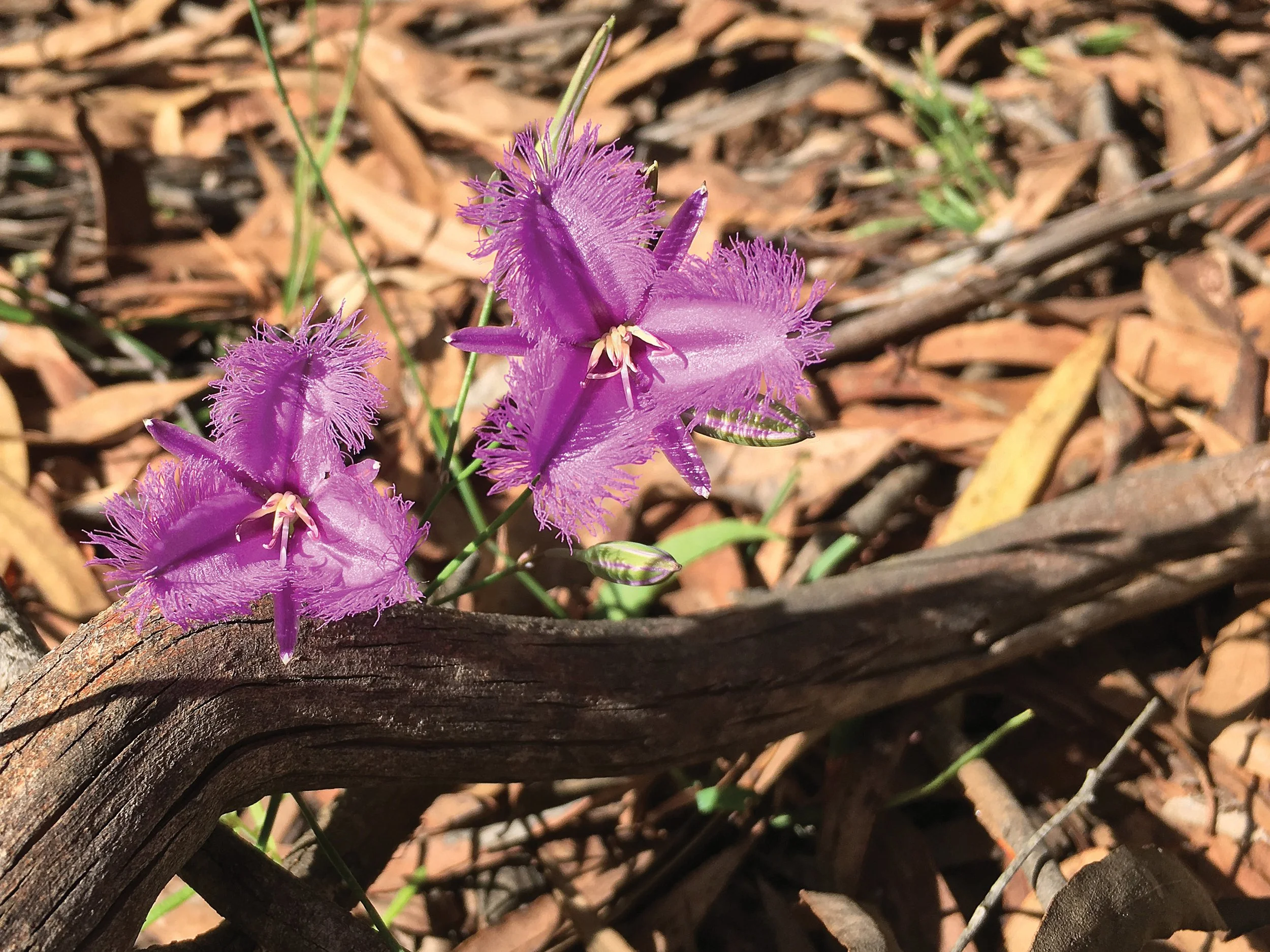
Common Fringe-lily (Thysanotus tuberosus) are starting their Spring blooms in September. (Photo taken in the Strathbogie Ranges, by Mel Stagg)
This week GVEG submitted a response to DEECA’s ‘Discussion Paper - A better approach to managing the biodiversity impacts of renewable energy’ (the discussion paper can be viewed here).

Make it stand out
Whatever it is, the way you tell your story online can make all the difference.
Our full submission can be viewed here:
The modern transport network was fashioned on traditional pathways.
Tracks through the landscape followed landmarks, and where there are no hills or monolithic boulders, large old trees would guide the route.
Trees would be recognised for their shape and stature or manipulated and scarred to mark the way through country; generation after generation.
Some of these trees still stand on roadsides in country Victoria.

One of the amazing old trees spared along the Midland Highway, East of Shepparton: This Grey Box has over a dozen hollows and is effectively like an apartment building for native birds and animals. Photo by Louise Costa
Just as roadsides are a network for human movement, they are also a network for animals and birds to traverse the land.
In many places across Victoria, roadsides are the sole remaining natural refuge in an otherwise cleared landscape. They offer some of the last remaining forms of connectivity from one island of remnant trees to another.
They are often untouched fragments of pre-european Victoria and can represent eco-systems more diverse and intact than our Parks; many of which have been cleared, mined and grazed.
Unfortunately, little by little, these familiar lineal reserves are disappearing.
Planning laws, public safety, infrastructure exemptions, fire risk, access and fear are all contributing to the disappearance of “the front gardens of the nation”. (Edna Walling 1952)
With their loss, we are witnessing the incremental decline of biodiversity and the erosion of our sense of pride in Victoria’s natural history.
But surely, if we can build space-ships, sky-scrapers, robots and driverless cars; if we can circumnavigate the globe through the air and on water, we can also circumnavigate the precious few ancient living remnants on our roadsides.
In a recent road safety improvement project on the Midland Highway east of Shepparton, four groups came together to negotiate a safer road design which would see the retention of over two hundred roadside trees.
Many of these specimens were large, ancient eucalypts, recognisable as landmarks that give the area a sense of place.
Historically, a project of this type and scale would have resulted in a massive environmental and landscape-scale loss with repercussions felt at a social level as people come to terms with the change in the landscape they call home. The loss of their front garden.
Every tree within the project envelope would have been removed, reduced to firewood and replaced with roadside barriers and bitumen and this would all have been done without any community consultation.
But in recent years, roadside trees have surfaced in society as an important issue and it seems that widespread community appeals to road managers for greater roadside protections have been taken seriously. Statewide forums were held and conversations between lobby groups and road managers focussed on vegetation protection and the importance of genuine community engagement. This work has created a cultural shift and a more balanced approach to infrastructure design is now emerging.
In the case of the Midland Highway, Regional Roads Victoria (formerly VicRoads) wanted to undertake a major road safety project which widened, re-surfaced and allowed for over-taking lanes along the road, complete with guard railing to prevent run-off road accidents.
Significant trees within the construction footprint had been identified and initial design solutions were applied to protect many of these specimen but the project manager was keen to work with the community to look at ways that more trees could be saved.
Together with the City of Greater Shepparton and representatives from the Goulburn Valley Environment Group and Sheep Pen Creek Landcare group, a road was designed that respected and retained the existing roadside environment without compromising safety measures.
Over several meetings which included site visits, negotiations focussed on the importance of finding ways to protect individual trees. One particularly huge and significant tree would have been lost without the application of a side road re-alignment which not only saved the tree but made entry to the highway safer.
The collaboration culminated in the protection of two hundred and forty nine trees out of a possible two hundred and fifty and is one of the most environmentally successful major road safety projects in the Goulburn Valley. The removed tree will be offset by reinstating its trunks and branches back into the landscape in local Landcare projects as woody debris for habitat and revegetation will take place.
It seems, at least with this project, that a new way of consultation has taken place. One that can certainly be replicated for other similar projects across the state.
The Midland Highway road safety project is an example of what can be achieved when people work together with a common goal to protect and enhance the roadside environment so that future generations can continue to enjoy Victoria’s Ribbons of History.
We aim to continue to work closely with the government, agencies, academics and the community to raise awareness of the threats and values of the Victorian roadside.
By Louise Costa, Goulburn Valley Environment Group
Funded by a Victorian Government Biodiversity On-ground Action Grant – Community and Volunteer BOA2017CA373
More than twenty years ago GVEG undertook two major assessments of the conservation status of flora and fauna in the Eastern Northern Plains of Victoria, publishing two reports. In 2018-20 GVEG supported a follow up project to assess the sites identified in these reports and carry out works to help protect them.

Swainsona murrayana, Slender Darling-pea
In the years since the reports, many of the recommended changes to conservation status have been achieved, notably the creation of Barmah National Park, Lower Goulburn National Park, Warby-Ovens National Park and Broken-Boosey State Park.
As well, GVEG initiated practical management actions to protect threatened plants at about dozen sites.
The 2018-20 project aimed to assess the effectiveness of these particular actions but also to assess the changes in status of threatened plant populations more broadly over two and a half decades in response to changed land tenure and changed management. We focussed on 22 sites assessed in the initial survey that had the richest threatened* flora or which had the only population of a threatened species.
More information, click here to go to our Projects & Campaigns page.
Have you ever seen an amazing little Common Dunnart? We’re lucky enough to have them in the Goulburn Valley, but sadly they are often mistaken for introduced pest species of rodents, such as the destructive House mouse (Mus domesticus), and unknowingly disposed of. If you want to help protect these amazing little critters, and learn how to tell the difference between the Common Dunnart (Sminthopsis murina), other precious native mice and the introduced pest rodents, then read on for an article to find out more.

This Common Dunnart (Sminthopsis murina) was caught in a non-lethal mouse trap (thank goodness!) on a front porch in Rushworth, Central Victoria. Photo by Louise Costa & Les Pelle.
The native ‘marsupial mice’ are all in the Family Dasyuridae – not even closely related to Old World mice. Many Goulburn Valley and Strathbogie Ranges residents will be familiar with the local Brown Antechinus (Antechinus agilis), or the Yellow-footed Antechinus (A. flavipes) of the foothills and plains, perhaps even with the spectacular Tuan (Phascogale tapoatafa), aka the Brush-tailed Marsupial Rat (until the 1960s). But one marsupial mouse that few regional Victorians are familiar with is the Common Dunnart (Sminthopsis murina), once also known as the Mouse-Sminthopsis – not at all common in Victoria and certainly not a mouse.
Though similar in appearance to both an Antechinus and a House Mouse (Mus musculus), when closely examined it is quite different to both. It’s smaller size, pale ventral fur, lack of yellow fur and eye-ring and it’s white feet distinguish it from the Yellow-footed Antechinus. The crinkled ears, pointy snout and lack of ‘mousey smell’, help to distinguish it from a House Mouse.
This little insect-eating marsupial is found mainly in Central and Western Victoria, though its distribution is very patchy and much more poorly understood than it’s Antechinus cousins.
The Common Dunnart has been recorded in the Goulburn Valley from regions to the west and south of the Strathbogie Ranges. It may once have occurred in the dry forests and woodlands around the ranges and in the foothills, though there are no confirmed records. But, being so small and easily confused with more common species, it may have been overlooked.
If you live in the bush and have mouse-like critters visiting your house and surrounds, consider using non-lethal mouse traps – you may be surprised what you find. Thanks Lou and Les for bringing this particular marsupial mouse to our attention!
Article by Bertram Lobert.