
Update on Murray Darling Basin Plan review – May 1st deadline
There is currently a lot of media attention on the Murray Darling Basin Plan review discussion paper, due for comment by May 1st. This is an important opportunity for our members and supporters to have your say about the importance of the Plan and the importance of ensuring that there is sufficient water allocated for the environment. This can be a complicated exercise or can be a simple as describing what value you place on our rivers and streams across the Basin.
GVEG will be submitting an extensive submission that will be available on our website ASAP, but your committee ask you to consider a private contribution to compliment the work of GVEG and similar organisations.
Comments are required to be emailed to BPRsubmissions@mdba.gov.au by Friday the 1st of May 2026
Below are sites that GVEG have an association with that provide guidance to individuals on submitting comment.
https://environmentvictoria.org.au/action/2026-basin-plan-review-submission/
https://mdca.org.au/high-ambition-statement/
https://envirojustice.org.au/submission-guide-murray-darling-basin-plan-review/
https://mdca.org.au/
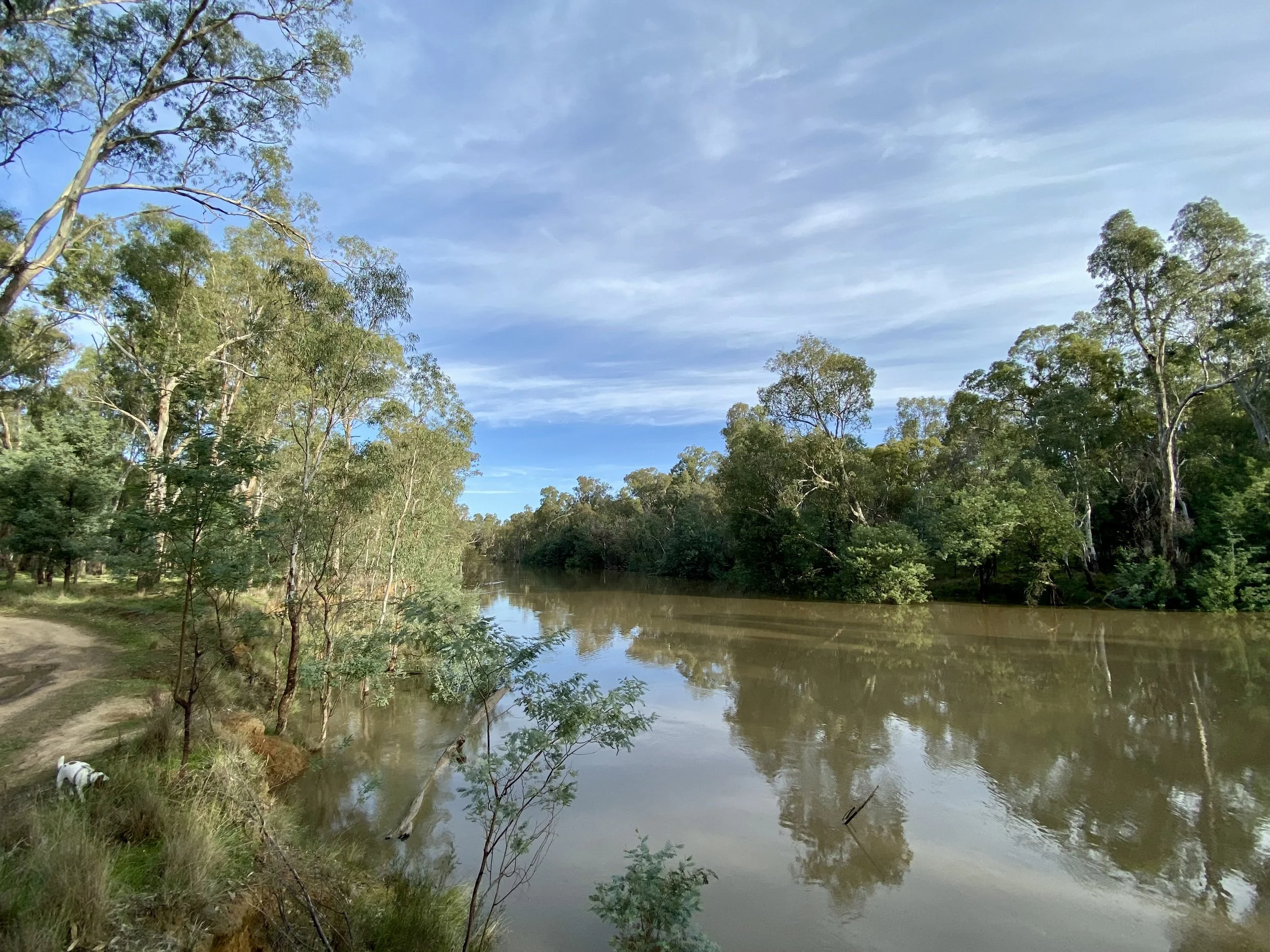
Goulburn River, Shepparton. Photo by Mel Stagg, 3rd May 2020
You can also read our environmental water policy for guidance.
Our high-level points which will be included in our submission are as follows:
The MDB Plan has been critical in helping maintain or restore the environmental health of the MDB’s rivers, wetlands and floodplains
The over-arching vision of the Plan for a healthy working MDB (including healthy ecosystems, productive water-dependent industries, basin water management that includes matters relevant to First Nations peoples, and communities with sufficient water supplies to sustain them) has provided a sensible and effective framework for delivering the Plan since 2012. We believe that it remains current for the next iteration.
The 2007 Water Act required that the Basin Plan be developed and implemented in a manner that optimises social and economic outcomes during the process. GVEG believes this overall requirement has been met, as supported by the 2025 Basin Plan Evaluation which found that water reforms had had a relatively minor effect on the Basin's overall economy.
Regardless of the outcomes of the review, it is critical that the existing Plan’s environmental water recovery targets are delivered within this Plan’s timeframes.
The impacts of climate chang e on reduced inflows and higher variability are a critical part of future planning and adaptation.
We support the Discussion Paper’s recognitions tnat First Nations peoples and their visions for a healthy Basin need to be more actively included in the MDB review.
GVEG is a strong advocate of targeted, voluntary water buybacks as an effective means of achieving the Plan’s environmental water targets and consider that some of the other water-efficiency projects delivered as alternative ways of recovering water have not been cost-effective.
Easing of constraints on out-of-channel or overbank flows is critical to improving the ecological health of the MDB’s wetlands and floodplains, as documented for the Goulburn system.
The Review, and MDBA, need to be better articulate how water is allocated and used across the Basin.
When enough time is enough time
GVEG water spokesperson, John Pettigrew, has called out cries by some local business and community advocates for additional time to prepare submissions to the MDB review. Read our media release here.
Submission to the Parliamentary Inquiry into the Victorian Summer Fires
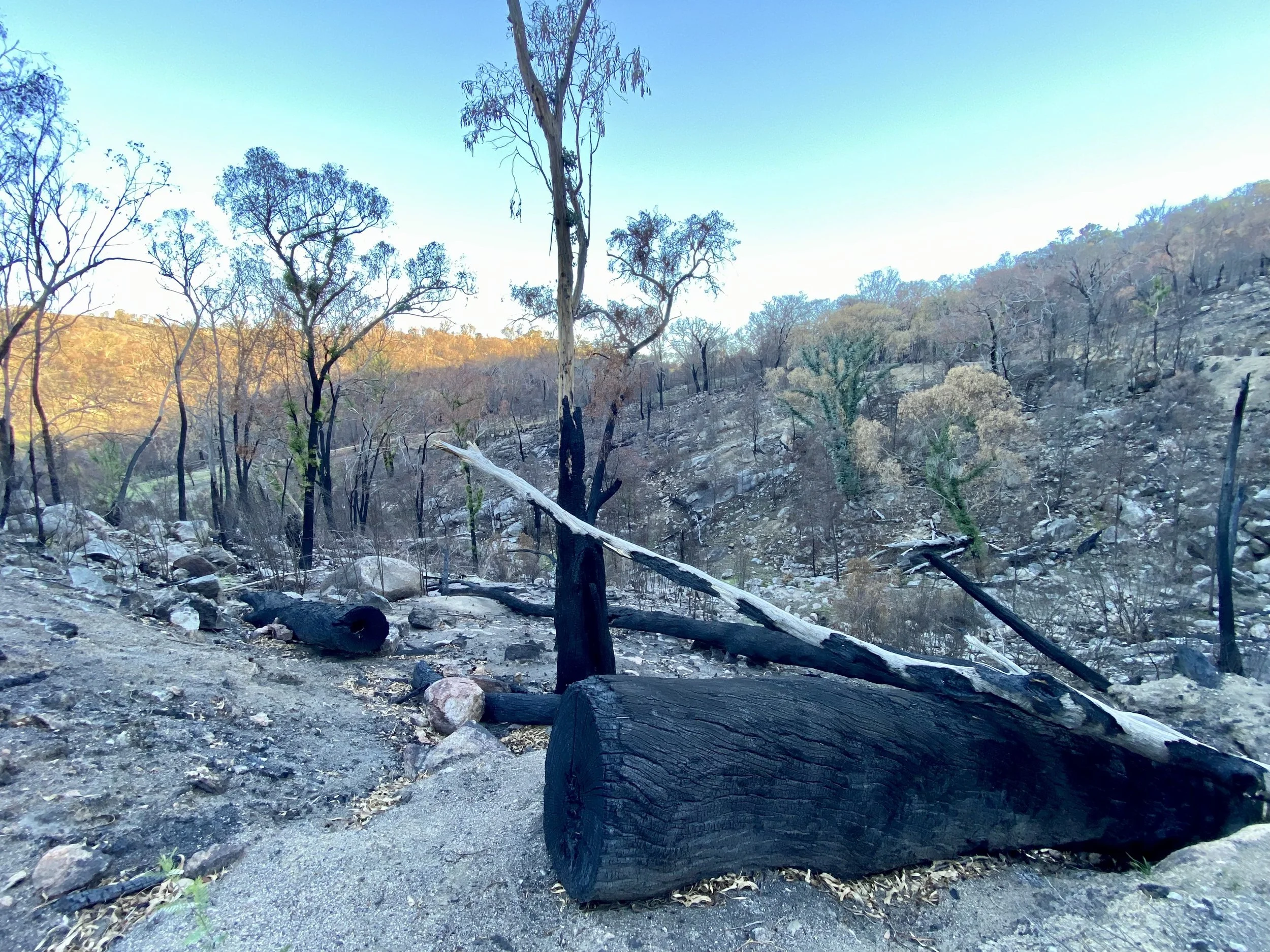
Gully burnt in the Longwood fire, Longwood East. Photo by Mel Stagg 6th March 2026.
GVEG provided a detailed submission to this important Inquiry, which you can read here.
Our main recommendations were that:
Prescribed burning practices in Victoria need to be urgently reviewed, and alternative options for reducing fire risk introduced.
The Joint Fuel Management program be reviewed to incorporate regional and statewide targets for Planned Burn Exclusion Zones to ensure that sufficient areas are being allowed to mature into less fire-prone vegetation stages to provide refuge at a scale that enables ecosystems and vulnerable species persist.
In the context of the impacts of the Longwood-Merton fire, a wildfire-mitigation landscape plan should be developed for the 24,000 ha Strathbogie Immediate Protection Area (IPA) to minimise the risk of these long-unburnt mature forests being burned.
Management strategies and funding programs for roadside weed management be reviewed to incorporate weeds that may not be listed under the CALP Act but contribute significantly to fuel loads and increased fire risk (e.g. Wild Oats, Phalaris, Perennial Veldt-grass)
Increased funding be provided to local governments and road management agencies to support ongoing, strategic weed-reduction and biomass-reduction programs along major roads
Clearer lines of responsibility are established for roadside weed and biomass management as the current system is too devolved by road authorities and LGAs to ensure that a strategic biocontrol and fuel-reduction program is being delivered regionally and statewide.
One-off permits could be issued for small-scale burns during the fire-danger period with restrictions on use (as per Schedule 13 permits for farmers but scaled to smaller properties)
CFA brigades could be supported to assist with burning clear zones around houses and other infrastructure where landholders requested that support.
’Immediately implement stronger commitments to urgent reduction in greenhouse gas emissions.’
Significant, long-term funding is provided by government to support recovery of the natural environment, which matches funding already committed to help local communities and landholders recover. The natural environment likewise needs this investment!
We suggest that these resources need to be incorporated into standard recovery practices following major wildfires.
Strategic biodiversity-response programs needs to become a structured part of the conservation work of DEECA and its partner agencies and stakeholders, helping to then provide rapid, expert response to major fires.
Protection and retention of large trees become a priority action as part of pre-burn, burn and post-fire management and recognises their significant ecological and cultural values.
There needs to be a dedicated, government-led effort to mitigate misinformation and disinformation.